View of Siena with Piazza del Campo and the Torre del Mangia soaring among the "burnt sienna" colored roofs.
Siena rises on three hills in the heart of Tuscany and is famous for its brick historic center, for the Palio horse race, and for a strong neighborhood identity linked to the "contrade". The atmosphere is still that of a medieval power, with scenic squares, uphill alleys and an incredibly rich gastronomic tradition.
Of Etruscan and Roman origin, Siena experienced its greatest splendor between the 13th and 14th centuries, when the Republic of Siena was one of the major economic and artistic powers in Tuscany.
The Council of Nine, in office between 1287 and 1355, transformed the city with major public works and the creation of Piazza del Campo, giving impetus to a refined school of painting and architecture.
After the defeat against Florence in the 16th century, Siena lost its independence but preserved its extraordinary medieval urban layout, today recognized as a UNESCO World Heritage site.
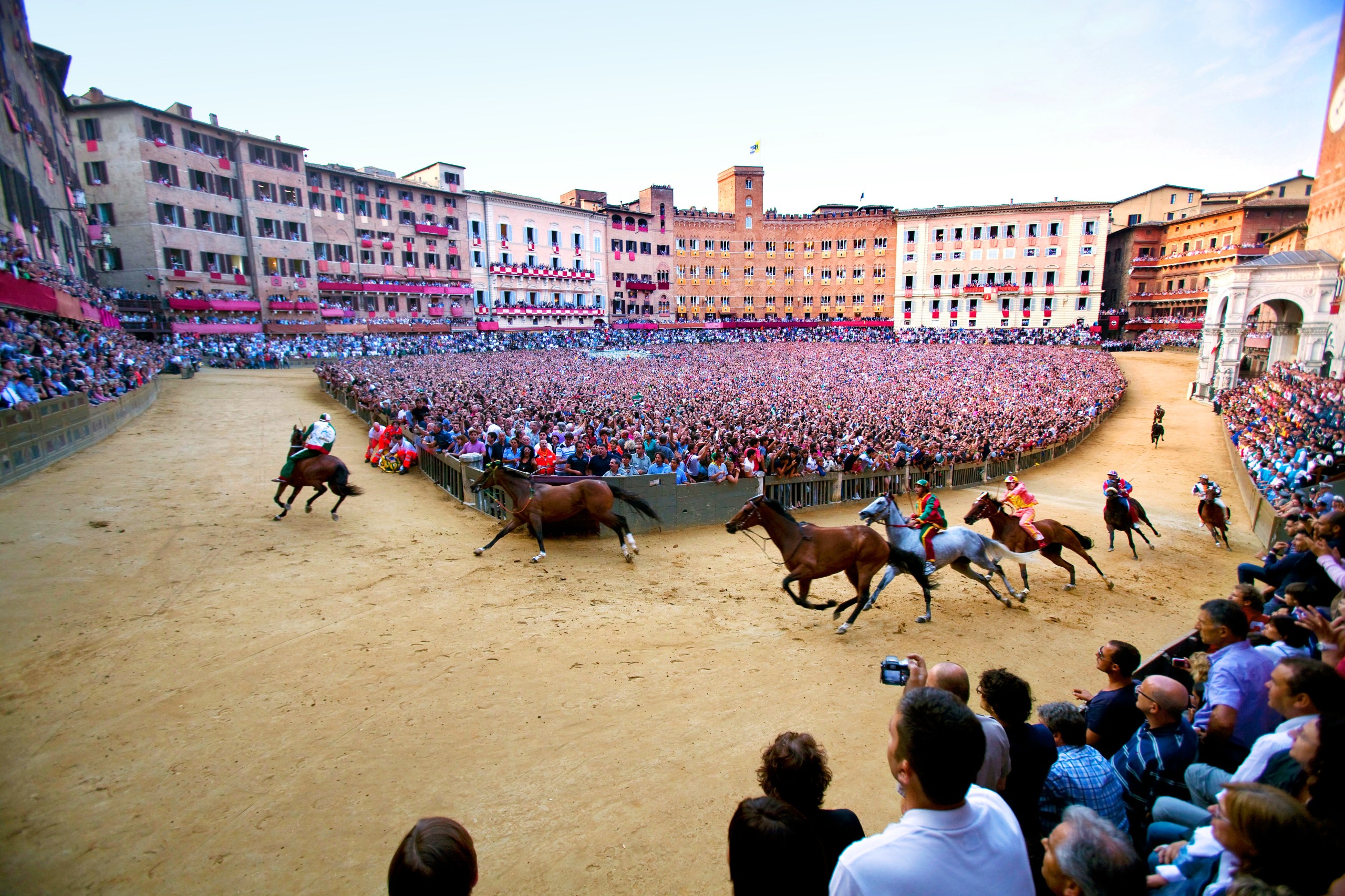
Piazza del Campo is considered one of the most beautiful squares in Europe, with its shell shape and nine sectors recalling the Government of the Nine; overlooking it are the Palazzo Pubblico, home to the Civic Museum, and the slender Torre del Mangia.
From the top of the tower, you can enjoy a breathtaking view of the city roofs and surrounding hills, while inside the palace, you can admire famous 14th-century fresco cycles.
The Cathedral of Santa Maria Assunta (Duomo) is a splendid example of Italian Gothic, with a two-tone marble facade, an inlaid floor, and works by artists such as Donatello, Bernini, and Michelangelo.
The complex also includes the Piccolomini Library, the Baptistery, the crypt, the Museo dell’Opera, and the so-called “Facciatone”, which offers a unique viewpoint over the city.
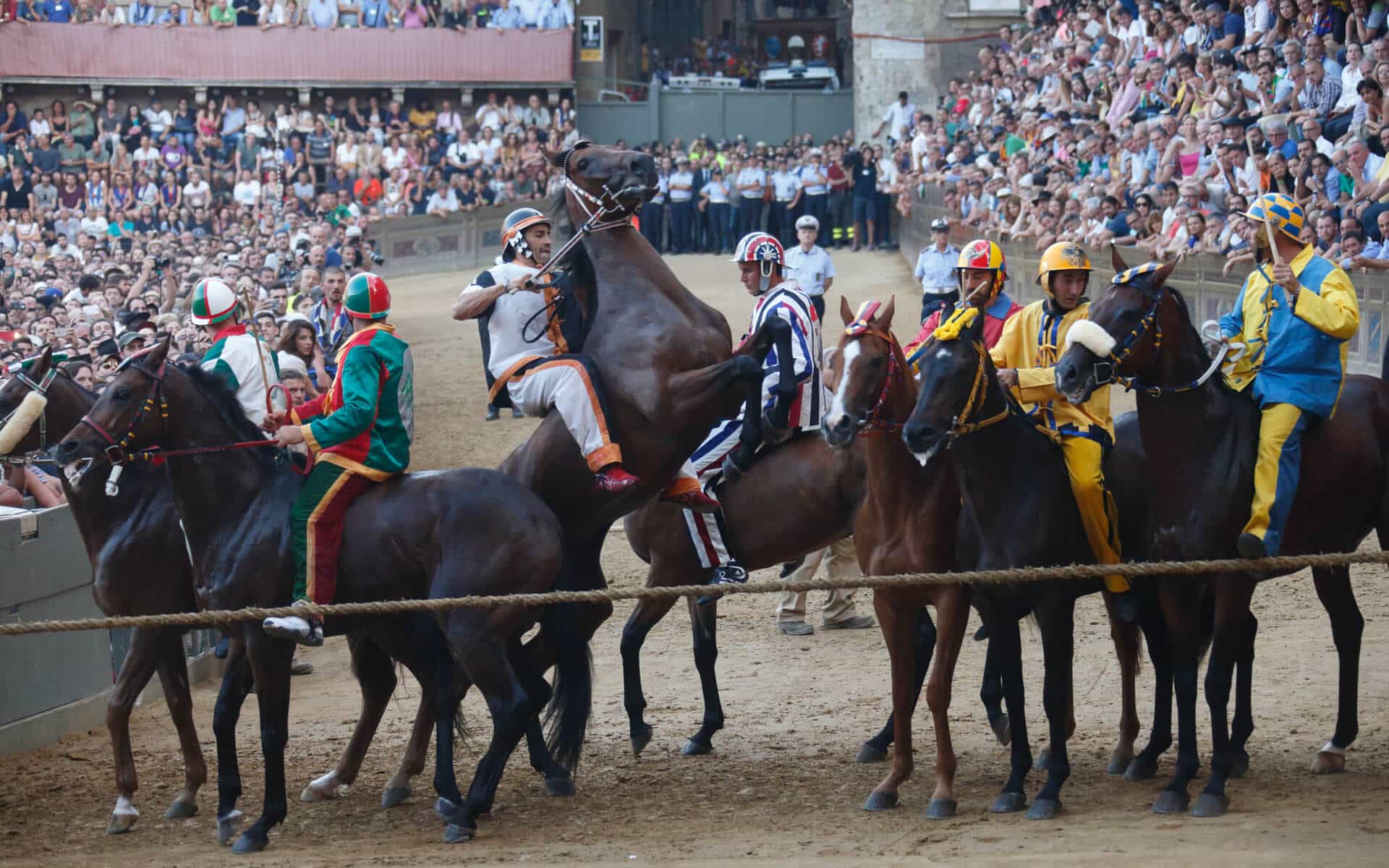
Twice a year, on July 2nd and August 16th, Piazza del Campo hosts the Palio di Siena, a horse race between the city's districts (contrade), a tradition that dates back to the 17th century.
The Palio is not just a race, but the most intense expression of neighborhood life: all year round the contrade organize parties, dinners, and celebrations related to this event.
Sienese cuisine is rustic and flavorful: handmade pasta, bread and vegetable soups, Chianina beef and wild boar, accompanied by wines like Chianti Classico and Brunello from the surrounding hills.
Pici are thick, hand-rolled spaghetti made only with water, flour, and oil; they are seasoned with robust sauces such as meat or wild boar ragù, or with the simple but intense "aglione" sauce made from Valdichiana garlic and tomato.
Among the most representative dishes is ribollita, a soup of stale bread, beans, and black kale (cavolo nero), born as a peasant recovery dish and today a staple of winter menus.
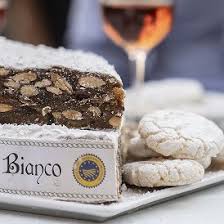
Siena is famous for its sweets: panforte, a dense blend of almonds, candied fruit, honey, and spices of medieval origin, and ricciarelli, soft almond paste cookies dusted with powdered sugar.
There is no shortage of almond cantucci, often accompanied by a glass of Vin Santo, and "pan co’ santi", a sweet bread with raisins and walnuts typical of the autumn period.