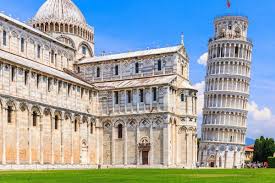
Piazza dei Miracoli, a UNESCO World Heritage site, featuring the Leaning Tower, Cathedral, Baptistery, and Monumental Cemetery.
Pisa stands near the mouth of the Arno river and was for centuries a powerful maritime republic, with a port that controlled much of the trade in the Tyrrhenian Sea. Today it is known primarily for the famous Leaning Tower, but it offers a lively historic center, Romanesque churches, and a cuisine rich in land and sea specialties.
Pisa's origins date back to the Etruscan and Roman eras, when the city was an important river and maritime port on the route to the Tyrrhenian Sea.
Between the 11th and 13th centuries, Pisa became one of Italy's four maritime republics, with a powerful fleet that participated in the Crusades and dominated much of the trade in the Western Mediterranean.
The naval defeat at Meloria against Genoa in 1284 marked the beginning of the decline of Pisan maritime power, leading up to the loss of political independence to Florence in 1406; however, the city remained an important cultural center, home to one of the oldest universities in Europe.
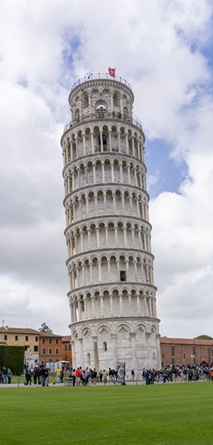
Piazza dei Miracoli, or Cathedral Square, is a large walled meadow overlooked by four main monuments: the Romanesque Cathedral, the Baptistery of St. John, the Leaning Tower, and the Monumental Cemetery, in addition to the Opera del Duomo and Sinopie museums.
Climbing the Tower offers a spectacular view over the city's rooftops and the Apuan Alps, while the interior of the Cathedral and Baptistery house sculptural masterpieces by Nicola and Giovanni Pisano.
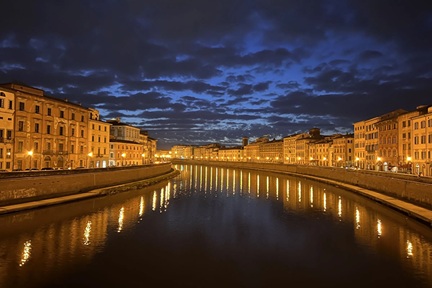
The Lungarni, the streets running along the Arno river, are lined with historic palaces, churches, and ancient noble residences that testify to the wealth of medieval and Renaissance Pisa.
Strolling towards the center, you will encounter Piazza delle Vettovaglie, the heart of the city market, the medieval Piazza dei Cavalieri, redesigned by Vasari, and numerous Gothic and Romanesque churches.
On the banks of the Arno stands the small Gothic church of Santa Maria della Spina, richly decorated with pinnacles and sculptures, so named because it once housed a relic from Christ's crown of thorns.
Pisan cuisine combines peasant tradition with seafood dishes, making extensive use of legumes, vegetables, bread, and extra virgin olive oil, alongside recipes linked to coastal products.
Cecina is a thin, savory flatbread made from chickpea flour, water, oil, and salt, baked in large copper pans in a wood-fired oven; it is enjoyed plain or inside a small focaccia, and is the most beloved street food for Pisans.
Bordatino is a thick soup prepared with Tuscan kale (cavolo nero), beans, and cornmeal or a mix of corn and chickpea flour—a humble dish linked to the tradition of shipyards and taverns along the Arno.
Due to its proximity to the coast, trattorias often feature fish and shellfish dishes, such as fish stews, squid and beans, salt cod, and salads with tuna and legumes.
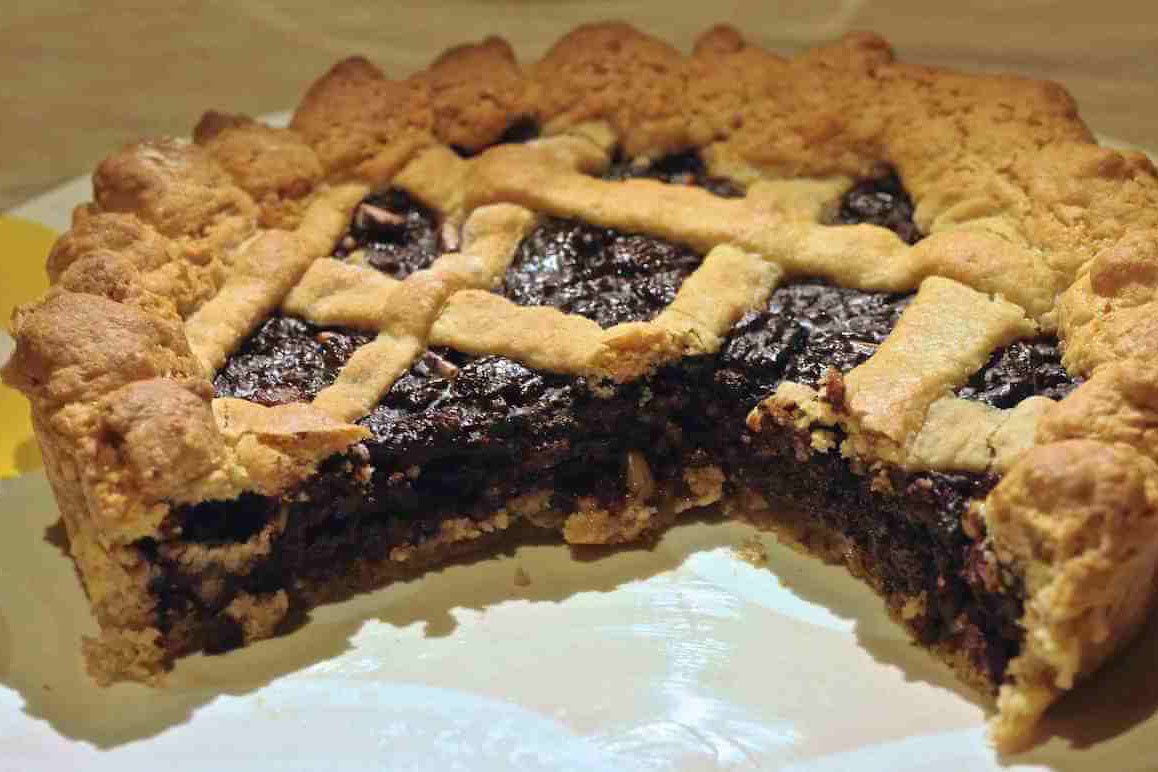
The most famous typical dessert is the "torta co’ bischeri," a shortcrust pastry tart filled with rice cooked in milk, chocolate, pine nuts, raisins, and candied fruit; the edge of the crust is decorated with characteristic “bischeri,” small points of twisted dough.