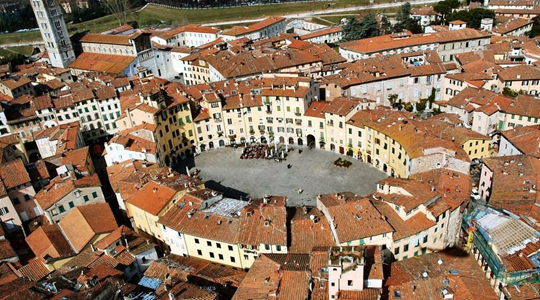
Aerial view of Piazza dell’Anfiteatro, the spectacular heart of Lucca's historic center.
Lucca is a cozy and livable Tuscan city, famous for its perfectly preserved Renaissance walls, its pedestrianized historic center, and a rich gastronomic tradition.
The origins of Lucca date back to Roman times: the layout of the historic center, with streets crossing at right angles, still preserves the plan of the ancient colony today. The current Piazza San Michele occupies the site where the forum once stood.
Between the Middle Ages and the Renaissance, Lucca was a wealthy independent city-state, prospering thanks to the silk trade and its fairs. To defend this heritage, it built a massive system of bastioned walls, started in the sixteenth century and completed only in the nineteenth century.
When their military function ended, the walls were transformed into a large elevated tree-lined park. Today they are a green ring surrounding the old city and one of the most beloved public spaces for citizens and visitors alike.
The walls of Lucca form a circuit of about four kilometers, wide enough to house shaded avenues, benches, and panoramic viewpoints. It is the ideal place for a sunset walk, a bike ride, or simply to observe the city from above.
The famous Piazza dell’Anfiteatro was built on the remains of the ancient Roman amphitheater. The houses still follow the elliptical shape of the arena today, enclosing a spectacular closed square full of bars and restaurants with outdoor tables: perfect for a break between monuments.
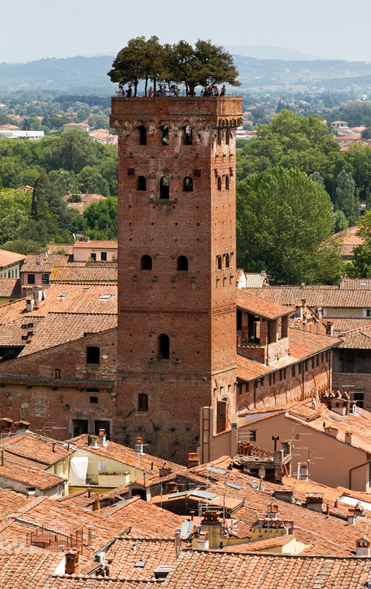
The Guinigi Tower is a unique medieval tower topped by a small garden of Holm oaks. From the top, you can enjoy a spectacular view of the city's red rooftops and the surrounding hills: the climb is demanding, but the panorama is worth every effort.
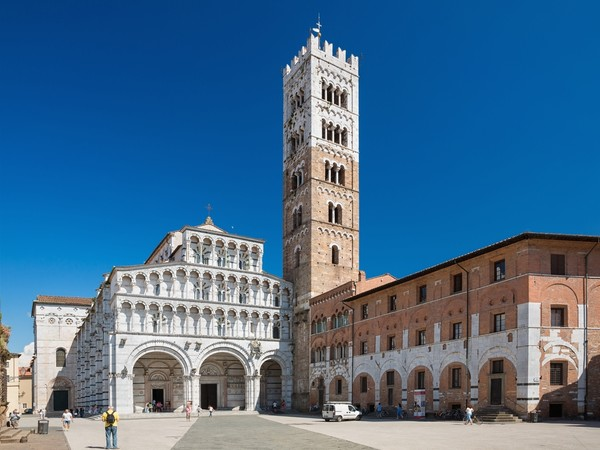
The Cathedral of San Martino is striking for its Romanesque-Gothic facade, rich in arches, columns, and sculptures. Inside, you will find important works of art and the famous Holy Face (Volto Santo), an ancient wooden icon venerated for centuries by the people of Lucca.
Don't miss the church of San Michele in Foro, built on the ancient Roman forum square, and the Basilica of San Frediano, recognizable by the large golden mosaic on its facade. The city streets, such as Via Fillungo, are perfect for strolling among shops, cafes, and small hidden squares.
Lucchese cuisine is a traditional rural cuisine, simple but flavorful, which highlights local products: spelt (farro), extra virgin olive oil, seasonal vegetables, legumes, meats, and local cured meats.
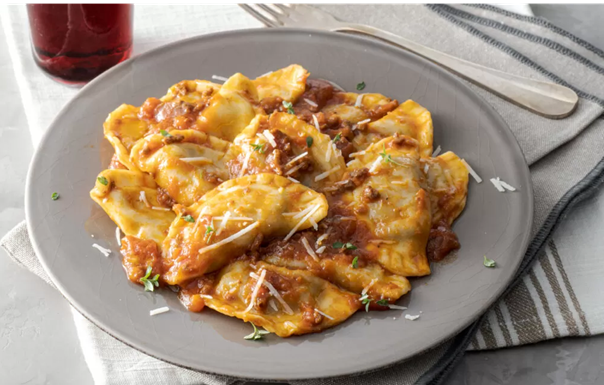
Tordelli are large egg pasta ravioli filled with a mix of meat, bread, aromatic herbs, and cheese. They are seasoned with a rich meat ragù and are one of the most representative dishes of the city.
Spelt (farro) from the nearby Garfagnana region is the star of a thick and fragrant soup, prepared with vegetables, legumes, and sometimes lard or pork rind. It is a nutritious dish, perfect in the colder seasons.
"Matuffi" and other dishes based on soft polenta, layered with ragù or mushrooms, are very common in traditional trattorias. Among the main courses, Lucchese-style cod (baccalà alla lucchese) stands out, slowly stewed with tomato, olives, and capers.
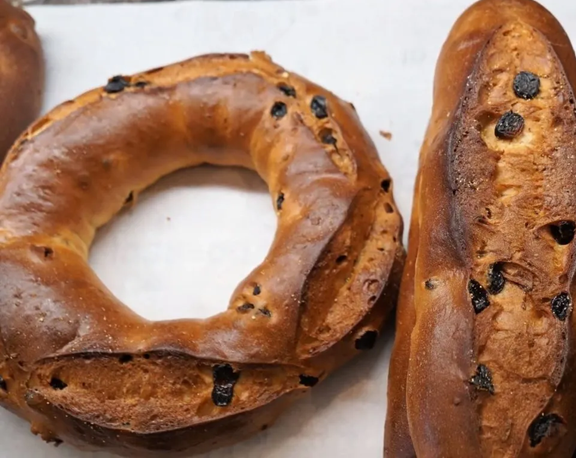
Buccellato is a soft sweet bread ring with raisins and anise seeds, enjoyed for breakfast, as a snack, or at the end of a meal, perhaps accompanied by a glass of sweet wine. It is one of the sweetest symbols of the city.