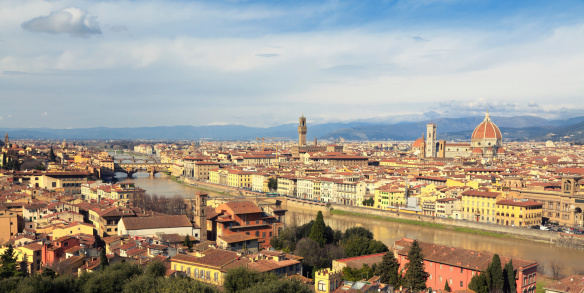
View of Florence with Brunelleschi's dome and Giotto's bell tower dominating the historic center.
Florence is the capital of Tuscany, nestled along the Arno River and surrounded by hills dotted with villas and vineyards, considered by historians and scholars to be the cradle of the European Renaissance. Its historic center is a UNESCO World Heritage Site and boasts an extraordinary wealth of monuments, museums, and palaces..
Founded by the Romans in the 1st century BC with the name Florentia, the city began as a military colony organized according to the classic grid plan with a central forum and orthogonal axes.
After a period of external domination, between the 11th and 13th centuries, Florence established itself as a wealthy communal republic based on trade and banking, until it became the main center of the Renaissance in the 15th century, thanks also to the patronage of the Medici family.
In the 19th century, the city took on a new political role as the capital of the Kingdom of Italy from 1865 to 1871, and then returned to being, above all, the cultural and artistic capital of the peninsula.
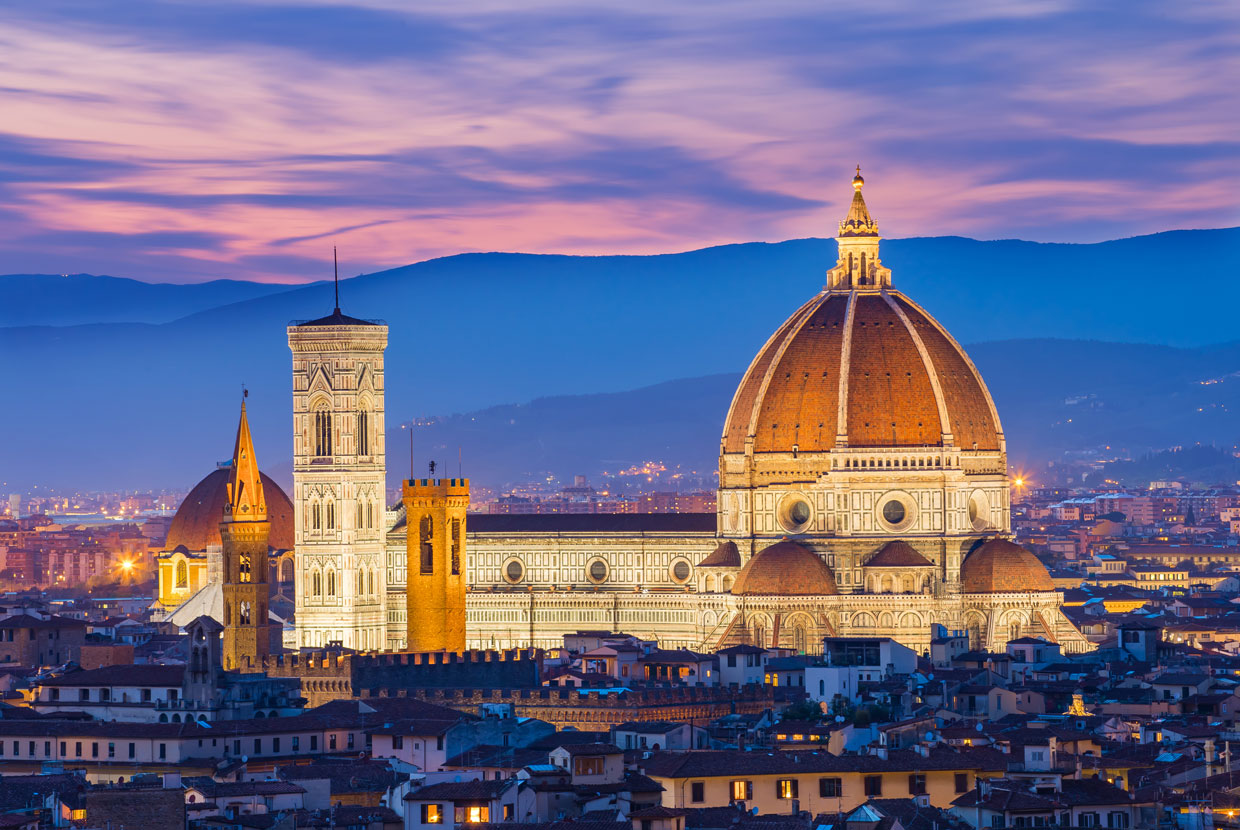
The Piazza del Duomo complex includes the Cathedral of Santa Maria del Fiore, the majestic dome designed by Brunelleschi, Giotto's bell tower, and the Baptistery of San Giovanni with its famous bronze doors. Climbing the dome or bell tower offers spectacular 360° views of the city's rooftops.
Piazza della Signoria is the political heart of Florence, dominated by the silhouette of Palazzo Vecchio and the Loggia dei Lanzi with its open-air Renaissance sculptures. A few steps away is the Uffizi Gallery, one of the most important art museums in the world, with masterpieces by Botticelli, Michelangelo, Leonardo, and many others.
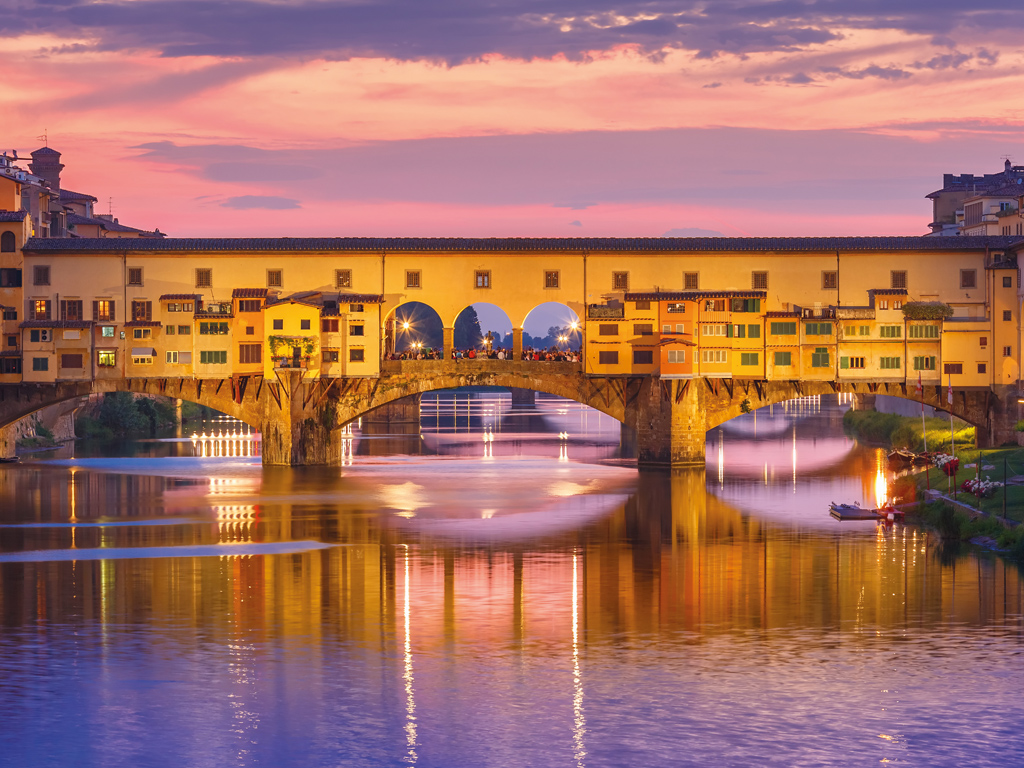
The Ponte Vecchio is the city's oldest bridge, famous for the goldsmiths' workshops that still line its sides and for the Vasari Corridor that connects it to the Uffizi and the Pitti Palace. Across the Arno, the Oltrarno neighborhood offers artisan workshops, gardens such as the Boboli Gardens, and lively piazzas where you can soak up a more local atmosphere.
On the hill south of the Arno, Piazzale Michelangelo is Florence's most famous viewpoint, with a panoramic terrace from which to admire the city skyline, especially at sunset..
Florentine cuisine is based on simple ingredients and hearty dishes: unsalted bread, grilled meat, legumes, and vegetable soups, along with famous tripe and ham specialties.
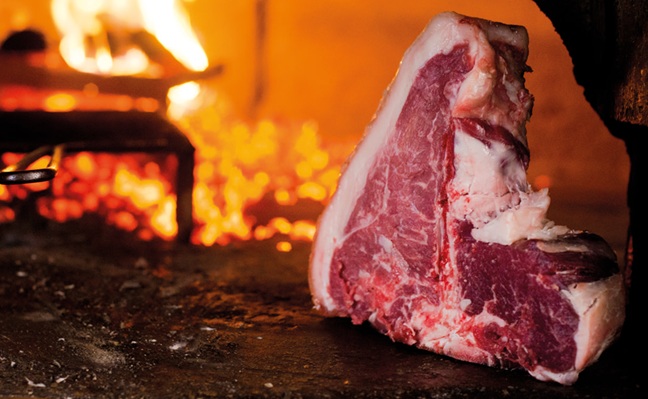
The Florentine steak is a massive rib-eye steak of Chianina beef, cut thick, grilled and served rare, seasoned only with salt, pepper, and a drizzle of extra virgin olive oil. It's a dish to share, often accompanied by beans in olive oil and a good Chianti.
Lampredotto is the most typical Florentine street food: one of the four stomachs of a cow, cooked for a long time in an aromatic broth and served in a soft bun with salsa verde or spicy sauce. It is found at kiosks called "trippai," often in the Mercato Centrale area and in the city center squares..
Among the first courses, ribollita stands out, a thick soup made with bread, cavolo nero, and vegetables, and pappa al pomodoro, made with stale bread, tomatoes, and basil, symbols of Tuscan peasant cuisine.
In addition to cantucci with Vin Santo, in season you can also find schiacciata all'uva, a sweet focaccia with black grapes and sugar, typical of the grape harvest period in the countryside around Florence.